
Blog · Korean culture
Korean bread names quiz
Guess the Korean bread from a description: 9 questions
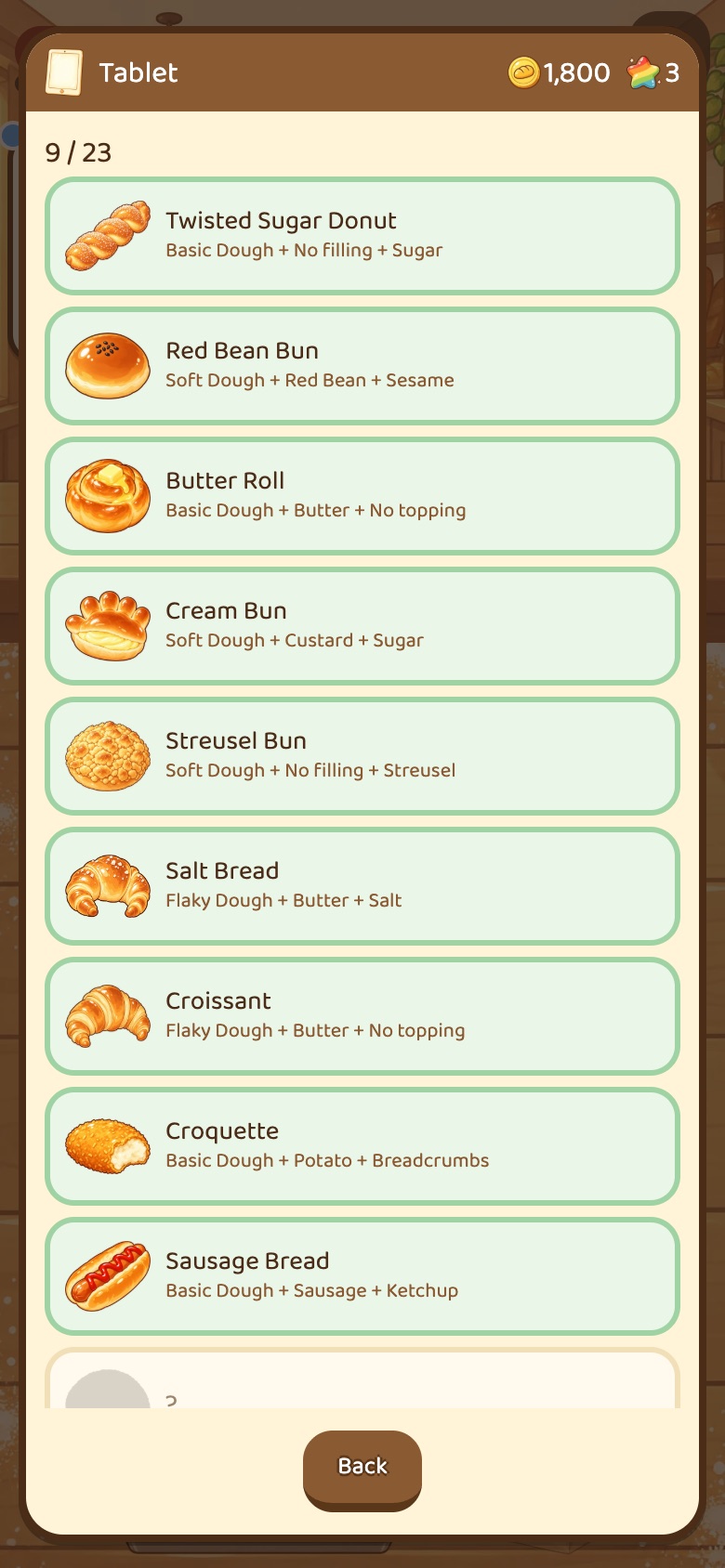
At a Korean bakery, plenty of people order without knowing the bread's name. "The one that's bumpy outside and empty inside" means soboro bread, and "the crescent-shaped bread with salty salt on top" means salt bread. The nine questions below are lines customers actually say in a bakery game I made. Try them first, then check the answer key, which also lists each Korean name and its romanization.
Questions 1 to 5: which bread is this?
No peeking yet. The day in brackets is the day that bread becomes available to order in the game, not the day the customer saying the line first shows up.
The answers are in the answer key right below.
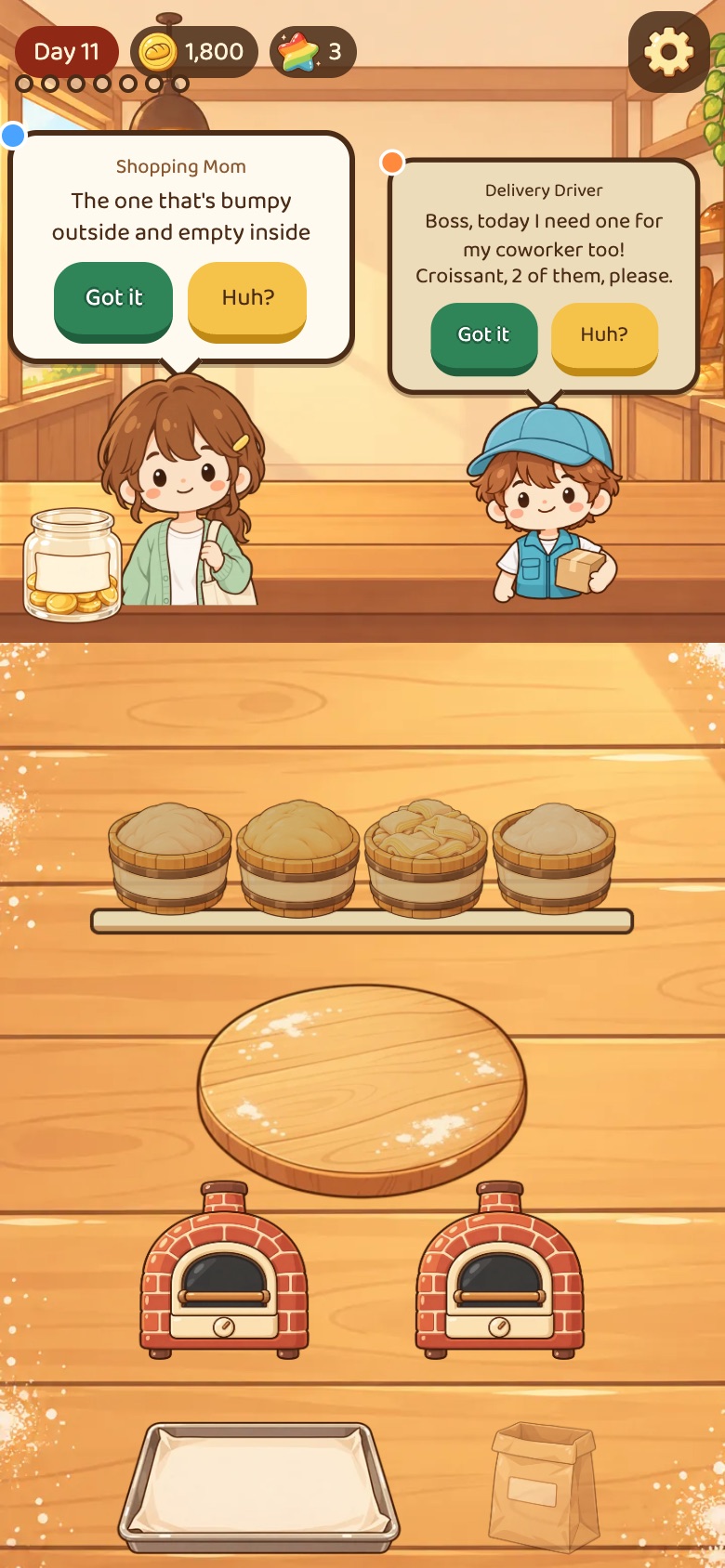
- Q1. "The one that's bumpy outside and empty inside" (day 5 bread)
- Q2. "The crescent-shaped bread with salty salt on top" (day 7 bread)
- Q3. "The round bun with sesame on top, the kind my grandma loved" (day 2 bread)
- Q4. "The one with yellow cream inside when you split it" (day 4 bread)
- Q5. "You know, the twisty one coated in sugar" (day 1 bread)
Questions 6 to 9: these get harder
There is a second crescent in here. I put it in on purpose so it gets mixed up with Q2.
- Q6. "The crescent bread that sheds crispy crumbs everywhere" (day 8 bread)
- Q7. "The long potato one in a crispy coat" (day 9 bread)
- Q8. "The ketchup one that always came in picnic lunch boxes" (day 10 bread)
- Q9. "The palm-sized one stuffed with white cream" (day 13 bread)
Answer key: English name, Korean name and the in-game recipe
The English column uses the most common name. Breads without an established English name are given as a plain description. The Korean column shows the name in Hangul with a romanization. In the game, every recipe is a combination of three slots: dough, filling and topping, written here exactly as the game shows them.
| Question | Answer | Korean name (romanized) | In-game name and recipe |
|---|---|---|---|
| Q1 | Soboro bread | 소보로빵 (soboro-ppang) | Streusel Bun: Soft Dough + No filling + Streusel |
| Q2 | Salt bread | 소금빵 (sogeum-ppang) | Salt Bread: Flaky Dough + Butter + Salt |
| Q3 | Red bean bun | 단팥빵 (danpat-ppang) | Red Bean Bun: Soft Dough + Red Bean + Sesame |
| Q4 | Custard cream bun | 크림빵 (keurim-ppang) | Cream Bun: Soft Dough + Custard + Sugar |
| Q5 | Twisted donut | 꽈배기 (kkwabaegi) | Twisted Sugar Donut: Basic Dough + No filling + Sugar |
| Q6 | Croissant | 크루아상 (keuruasang) | Croissant: Flaky Dough + Butter + No topping |
| Q7 | Croquette | 고로케 (gorokke) | Croquette: Basic Dough + Potato + Breadcrumbs |
| Q8 | Sausage bread | 소시지빵 (sosiji-ppang) | Sausage Bread: Basic Dough + Sausage + Ketchup |
| Q9 | Mammoth bread | 맘모스빵 (mammoseu-ppang) | Mammoth Bun: Soft Dough + Whipped Cream + Streusel |
The easy pair to mix up: salt bread vs croissant
Q2 and Q6 are both crescents, so from the customer's words alone they sound like the same bread. One clue tells them apart: if you can see salty salt on top, it is salt bread, and if there is no salt and it just drops crispy crumbs, it is a croissant.
In the game, the two recipes differ by a single topping slot. Both use Flaky Dough with a Butter filling. Add Salt and you get Salt Bread; leave the topping empty and you get a Croissant. Real bakers make them in much more different ways, so read this as the game keeping its rules simple. The real difference between the two is in a separate salt bread post.
Why I made this quiz: the game where customers never say the name
In Chichi's Baking: Cooking Games, customers stop naming the bread. Early on they order by name, like "Croissant, 2 of them." From day 8, as the game itself puts it, you get orders that go "you know, that one…", such as "The one that's bumpy outside and empty inside."
The Bread Notebook holds 23 named breads, and every bread you have not made yet is hidden behind a question mark. Once you bake one, its name and ingredients are written into the notebook, so the only way to fill it is to listen to the customer and pick the dough, filling and topping yourself. All three slots have to match the notebook recipe exactly to get a named bread. Get even one wrong and you end up with Unnamed Bread, which sells for less.
How Korean bread names are written in English
English sources tend to translate salt bread literally as salt bread, while names that are firmly Korean, like soboro and danpat-ppang, usually stay in romanization. Neither approach is the single right one, so when you introduce a Korean bread for the first time, the safe move is to give the romanized name and add a short description in brackets.
For example, calling soboro bread a crumb-topped sweet bun, or danpat-ppang a sweet red bean bun, lets someone who has never heard the name picture it right away. The answer key above follows the same idea.
FAQ
What are the most popular Korean bakery items?
Soboro bread, red bean bun (danpat-ppang), cream bun, salt bread, kkwabaegi, sausage bread, croquette (gorokke) and mammoth bread are the ones that come up first. This post turns nine of them into a description quiz.
What is soboro bread called in English?
It is usually written in romanization as soboro bread. When you introduce it for the first time, describing it as a crumb-topped sweet bun makes it easier to understand.
What is Korean salt bread called in Korean?
Salt bread is the most common English name. In Korean it is 소금빵, sometimes written in romanization as sogeum-ppang.
What is kkwabaegi?
Kkwabaegi (꽈배기) is a Korean twisted donut. It is written either in romanization or as twisted donut, after its shape. When it is introduced as a street snack, the romanized name followed by a short description is the more common choice.
Is there a game where customers don't say the bread's name?
Chichi's Baking: Cooking Games, which I made, works that way. From day 8, customers order by looks, taste and memories, and you listen to what they say and pick the dough, filling and topping yourself.
Related
More from the blog
 ComparisonWe ran 9 Android ASMR games on a real phoneWe installed nine ASMR games on a Samsung Galaxy Z Flip5 and relaunched each in airplane mode. Install size, first screen and whether an ad blocks the game, checked on 20 November 2026.
 ComparisonOnsen and bathhouse games: 8 compared by what the store pages sayOnsen and bathhouse games from Steam, Google Play and the App Store in one table: price, rating, idle or not, Korean and Japanese support, plus the weak spots of our own game.
 ComparisonIdle tycoon games that work offline: 8 picks sorted by store labelsWhich idle tycoon games work offline? Google Play tag, store wording, list price and ads in one table, plus our own game's weak spots.
 Games likeFinished Kairosoft? 14 games to play next, sorted by what you lovedIf you have played through Kairosoft, here are 14 games sorted into four flavors: short grow-it sessions, running a shop, watching residents live, and layout puzzles. Steam list prices, review scores and UI languages checked by hand.