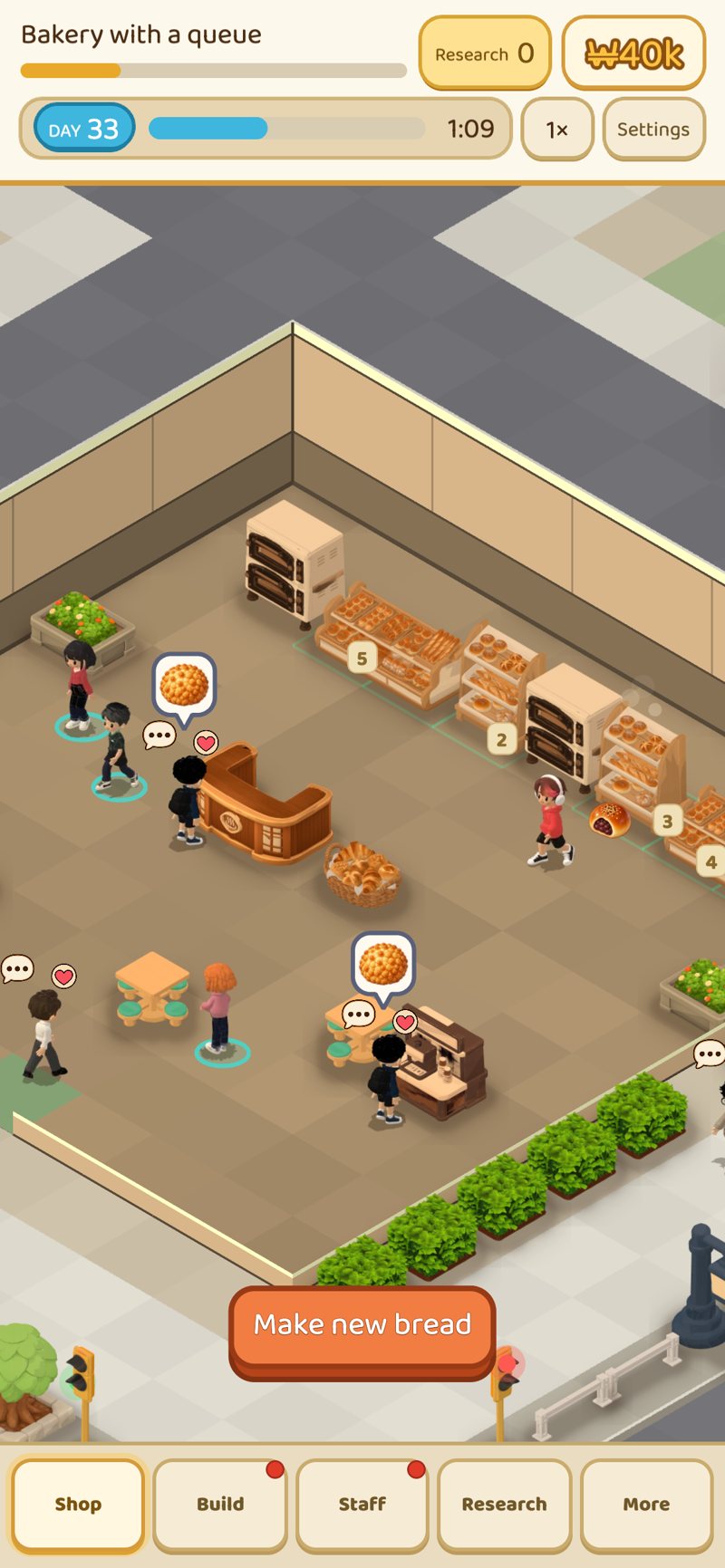
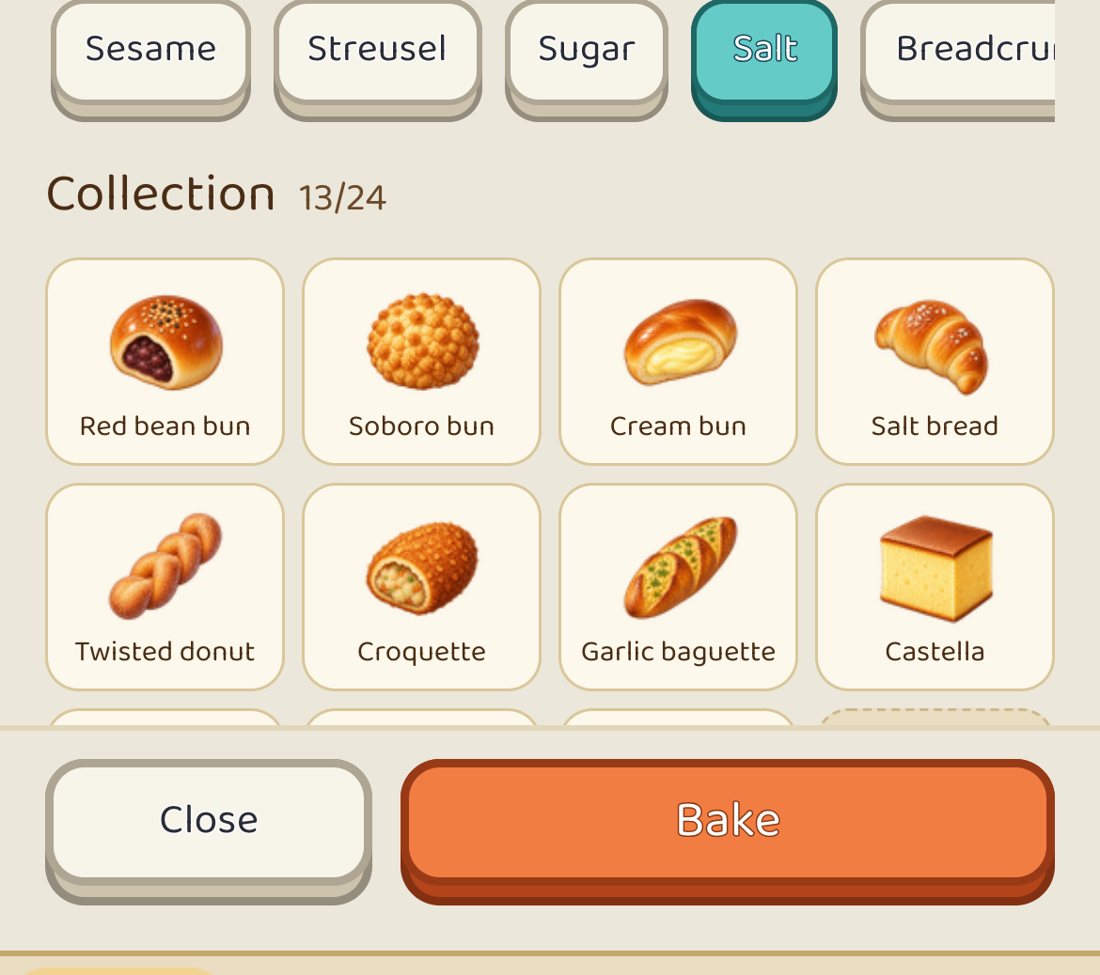
The basic lineup at a Korean neighborhood bakery is red bean bun (danpatppang), soboro bread, cream bun, salt bread (sogeumppang) and the twisted donut called kkwabaegi. Most of the shelf is sweet buns with a filling inside or a crumbly topping on the outside. Salty salt bread has recently earned a spot of its own. Our game, Bakery Simulator, has 24 of these breads in its collection, and each named bread appears when you pick a dough, a filling and a topping.
The five breads at the front of the shelf
At most neighborhood bakeries in Korea you pick up a tray, stand in line, and put the bread on it yourself. These five turn up on those trays more than anything else.
Red bean bun (danpatppang) is a soft bun filled with sweet red bean paste, with sesame seeds sprinkled on top. Soboro bread (soboroppang) is covered in a lumpy, cookie-like crumble, and when you tear it open the inside is often plain or nearly empty, so plenty of people have it with a glass of milk. Cream bun (keurimppang) is a squishy bun with custard cream inside. Salt bread (sogeumppang) is rolled around butter, baked, and finished with coarse salt, which leaves the outside crisp and the inside moist. Kkwabaegi, the twisted donut, is dough twisted into a rope, fried and rolled in sugar. Many Koreans knew it from snack stalls before they ever saw it in a bakery.
The name soboro is generally said to come from Japanese. Many articles also explain that salt bread started as Japanese shiopan and then took off in Korea. Wherever they began, these breads sit on the same tray at a Korean neighborhood bakery, each with its own dough and filling.
Outside and inside, side by side
The last column comes straight from our game's code. It shows the combo that makes each bread inside the game, so treat it as a game recipe; real bakeries use their own doughs and fillings.
| Bread | Outside | Inside | In-game combo (dough + filling + topping) |
|---|---|---|---|
| Red bean bun (danpatppang) | Soft bun, sesame on top | Sweet red bean paste | Brioche dough + red bean + sesame |
| Soboro bread (soboroppang) | Cookie-like crumble crust | Empty or light | Brioche dough + no filling + soboro |
| Cream bun (keurimppang) | Soft bun, a little sugar | Custard cream | Brioche dough + custard + sugar |
| Salt bread (sogeumppang) | Crisp outside, coarse salt | Butter | Pastry dough + butter + salt |
| Twisted donut (kkwabaegi) | Twisted, fried, sugared | No filling | Yeast dough + no filling + sugar |
Past the first five: the rest of the 24
Once you get past those five, the shelf opens up. Next come croquettes, garlic baguette, castella, milk loaf, chapssal donuts (sticky rice donuts), mammoth bread, sausage buns, pizza buns and mocha buns.
Mammoth bread is big and heavy, just like the name says. Sausage buns and pizza buns are what a lot of people grab instead of a meal. What sets a Korean neighborhood bakery apart from a Western one is that savory meal breads, sweet snack buns and donuts all share one shop, so the bread you reach for in the morning as breakfast is different from the one you want in the afternoon as a snack, and whatever ends up on your tray can be that day's meal.
In Bakery Simulator the collection adds butter rolls, cheese buns, chocolate buns, strawberry cream buns, corn buns, sweet potato buns, matcha rolls, chestnut loaf, apple pie and croissants. That makes 24 breads in total.
How the bakery grows in 6 stages
You start the game with one oven and two display shelves. Take the bread out of the oven, stock the shelves, and customers come in to buy it. The money you earn goes into more ovens, shelves and counters.
As your sales add up, the bakery's title changes too, step by step: it starts as an Alley bakery and moves through Neighborhood favorite, Bakery with a queue, Bakery destination and Regional landmark before reaching National bakery icon, six stages in all. There are 15 kinds of fixtures to place: 3 ovens, 4 display shelves, a checkout counter, 3 cafe pieces, a packing counter, a sign, a plant and a bread basket.
Mix your own and it gets a name
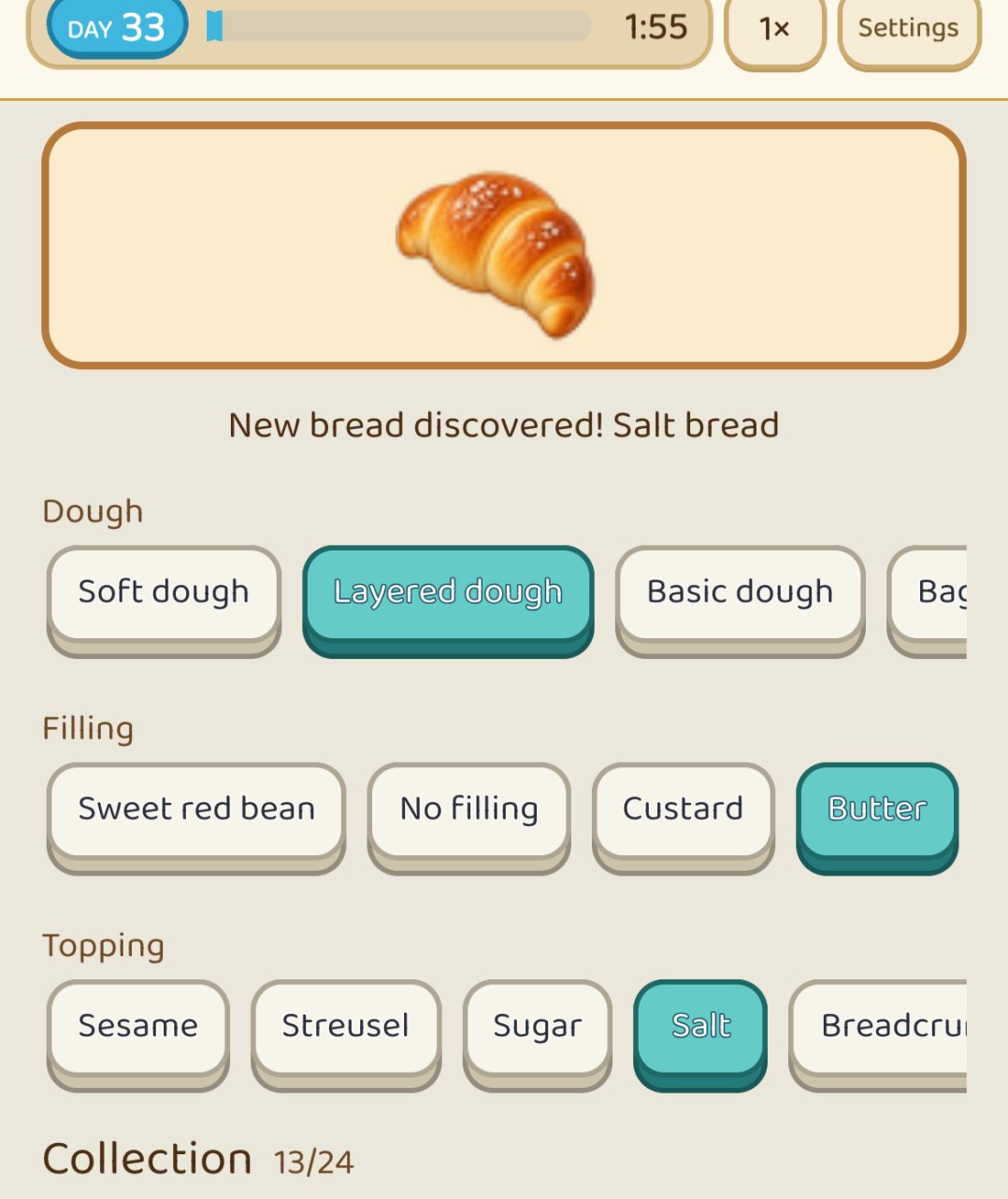
On the menu screen you choose one dough, one filling and one topping, then start research. A moment later the bread comes out. Brioche dough with red bean and sesame gives you a red bean bun. Use the same dough with no filling and a soboro topping, and you get soboro bread.
The first time you make a bread, a new-bread-discovered badge pops up and one more slot in the collection fills in. Pick the same combo again and you simply bake a bread you already know.
What our game doesn't do
Bakery Simulator is a bakery management game. It is no encyclopedia of Korean bread. The 24 breads in the collection are the ones we put in the game, so they don't cover every bread you'll find in a real Korean bakery. Street snacks like hotteok and bungeoppang aren't in this game either.
It's a free game with ads, and right now it's only on Android. On Google Play it comes in several languages, including Korean, English and Japanese. For what the bread names mean, go by the explanations in this article.
FAQ
What are the most popular breads at a Korean neighborhood bakery?
Red bean bun, soboro bread, cream bun, salt bread and kkwabaegi (twisted donut) show up most often at the front of the tray. Every shop is a little different, but the core is sweet buns with a filling inside or a crumbly topping, and these days salty salt bread has a spot right next to them.
What is soboro bread?
It's a bun baked under a crumbly, cookie-like topping. The lumpy crust is what gives it away. The inside is usually empty or light, which is why a lot of people eat it with milk.
Is salt bread Korean?
Many explanations say it started as Japanese shiopan and then became a hit in Korea. It's bread rolled around butter, baked, and topped with coarse salt, so the outside is crisp and the inside stays moist.
Is there a mobile game about running a Korean neighborhood bakery?
Yes, Bakery Simulator: Idle Tycoon. You start with an oven and display shelves, grow the bakery through 6 stages, and fill a 24-bread collection by combining dough, filling and topping. It's free on Google Play and has ads.
More from the blog
 ComparisonWe ran 9 Android ASMR games on a real phoneWe installed nine ASMR games on a Samsung Galaxy Z Flip5 and relaunched each in airplane mode. Install size, first screen and whether an ad blocks the game, checked on 20 November 2026.
 ComparisonOnsen and bathhouse games: 8 compared by what the store pages sayOnsen and bathhouse games from Steam, Google Play and the App Store in one table: price, rating, idle or not, Korean and Japanese support, plus the weak spots of our own game.
 ComparisonIdle tycoon games that work offline: 8 picks sorted by store labelsWhich idle tycoon games work offline? Google Play tag, store wording, list price and ads in one table, plus our own game's weak spots.
 Games likeFinished Kairosoft? 14 games to play next, sorted by what you lovedIf you have played through Kairosoft, here are 14 games sorted into four flavors: short grow-it sessions, running a shop, watching residents live, and layout puzzles. Steam list prices, review scores and UI languages checked by hand.