Blog · Korean culture
Korean PC bang culture
Why Korean PC bangs started selling food like restaurants, not just game time
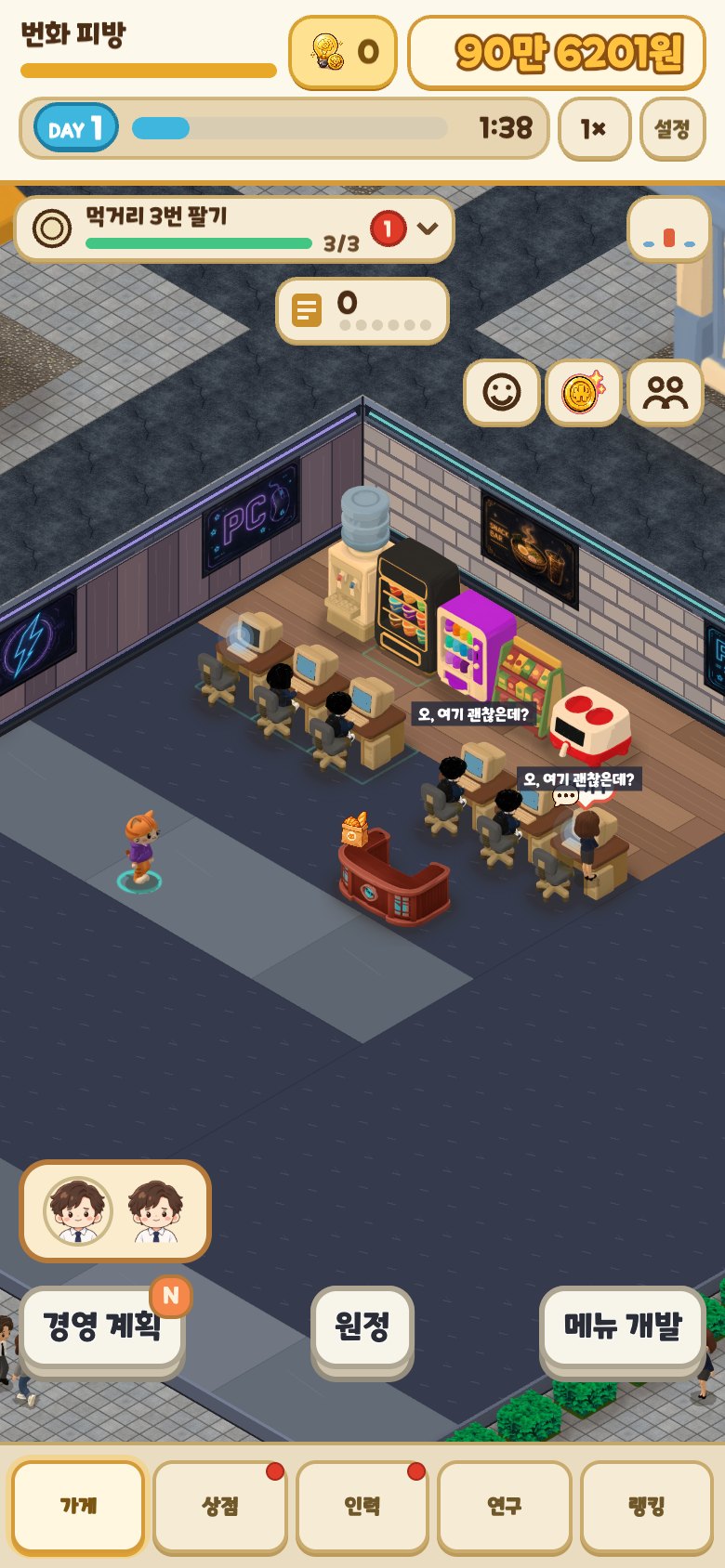
After the nationwide smoking ban in 2013 cut customers, PC bangs turned into bright, cafe-style spaces and grew food as the thing to sell besides seat time. According to the KB Financial Group Research Institute, food went from roughly 10% of sales in the past to about 40% in 2020, and one industry estimate puts shops with a proper kitchen at 40 to 60%. Cup ramen at 1,500 to 2,000 won and rice bowls at 5,000 to 7,000 won delivered to your seat in a Korean PC bang is not a coincidence. It is the result of this shift.
The 2013 smoking ban came first
Korean PC bangs spread with the StarCraft craze that began in 1998 and peaked at about 21,500 shops in 2009 (KB Financial Group Research Institute 2020-23, Bridge Economy 2019). Back then, hourly fees were almost all of the revenue and snacks were around 10%.
What changed things was the full smoking ban in PC bangs in June 2013. Customers who used to sit for hours smoking dropped off, and owners redid ventilation and interiors to look like cafes while putting money into food sales. Hourly fees alone could not make up for fewer customers, so they needed more to sell to the same customer.
The trend in numbers
I only collected what can be traced to a source. Official statistics (Statistics Korea, the Ministry of Culture, Sports and Tourism) have no line for the food share, so the shares are estimates from a research institute and the industry.
| When | What happened | Source |
|---|---|---|
| 2009 | About 21,500 PC bangs, the peak | KB Financial Group Research Institute · Bridge Economy |
| 2010 | A food-snitch reported a PC bang boiling packaged ramen to sell, reward about 50,000 won | etnews 2010-03-07 |
| 2013.6 | Full smoking ban in PC bangs | KB Financial Group Research Institute |
| 2016→2018 | Nationwide PC bang sales rebounded from 1.47 trillion won to 2.08 trillion won | Bridge Economy 2019-03-12 |
| 2020 | Food about 40% of sales (about 10% in the past) | KB Financial Group Research Institute 2020-23 |
| 2019 | PC bangs with a full kitchen get 40 to 60% of sales from food | PC Torang estimate, cited by Bridge Economy |
The law blocked it once
In 2010, at the height of the "food-snitch" reward system, PC bangs that boiled packaged ramen to sell became targets. A PC bang is a game-providing business, so cooking and selling food required a separate report.
The way it works now is to register as a combined distribution game-providing business. That license lets one place run both game facilities and a restaurant. Industry media explain that the area for internet computer game facilities must be above a certain ratio and the space has to be partitioned (iLovePCbang 2026-03). There are also reports that most new PC bangs now use this license. Details can differ by district, so anyone planning to open one should check with the local district office.
What they sell and for how much
The best sellers are cup ramen, kimchi fried rice, spicy pork rice bowls, chicken and toast. The price ranges come from one guide site for foreigners (Korea Plug, 2026-05). They differ by neighborhood and by shop.
- Some shops also serve hot dogs, fries, hamburg steak and pasta.
- More shops now handle everything from paying for time to ordering food in one go through an order app or seat ordering (KB Financial Group Research Institute).
| Menu | Price range |
|---|---|
| Cup ramen | 1,500 to 2,000 won |
| Rice bowls and fried rice | 5,000 to 7,000 won |
| Chicken | 6,000 to 9,000 won |
How is it different from internet cafes in other countries?
Taiwanese wangka (網咖) also sell food. Boiled instant noodles (泡麵) and fried rice (炒飯) are well known there, and they deliver too (setn 2022). So eating ramen at a PC bang is not unique to Korea.
The difference is the space. Japanese net cafes are built around private booths and drink bars and are closer to places to rest or sleep, according to Japanese blogs. A Korean PC bang is a place to play games at open seats, and what stands out is that food is a big share of sales. For Indonesian warnet I only confirmed Indomie and could not find a primary source comparable to the Korean data.
In my PC bang game, food also outgrew the seat fee
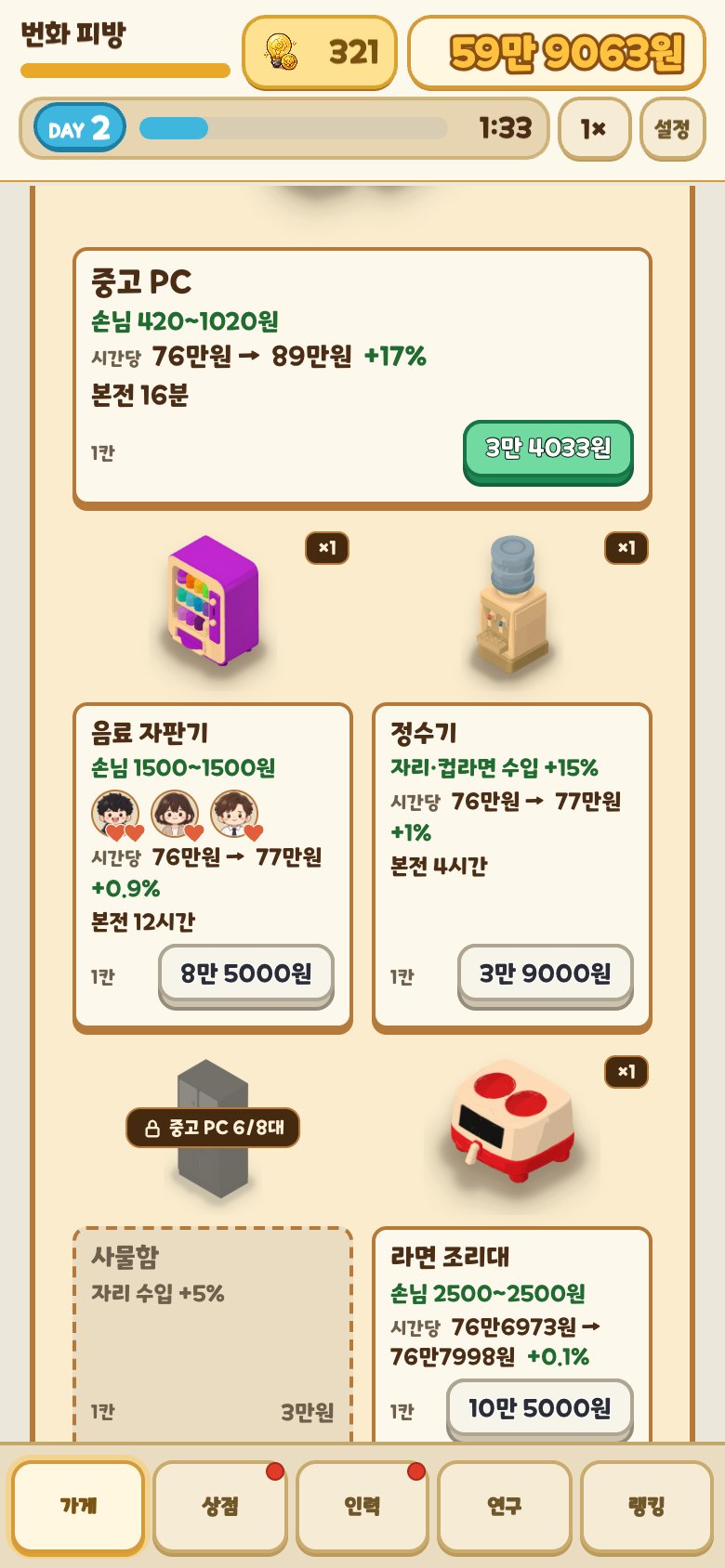
While making my PC bang management game, PC Cafe Tycoon, I put this trend straight in. If you only sell seats you hit a limit fast, and fixtures like the ramen counter, drink vending machine and water purifier carry the income.
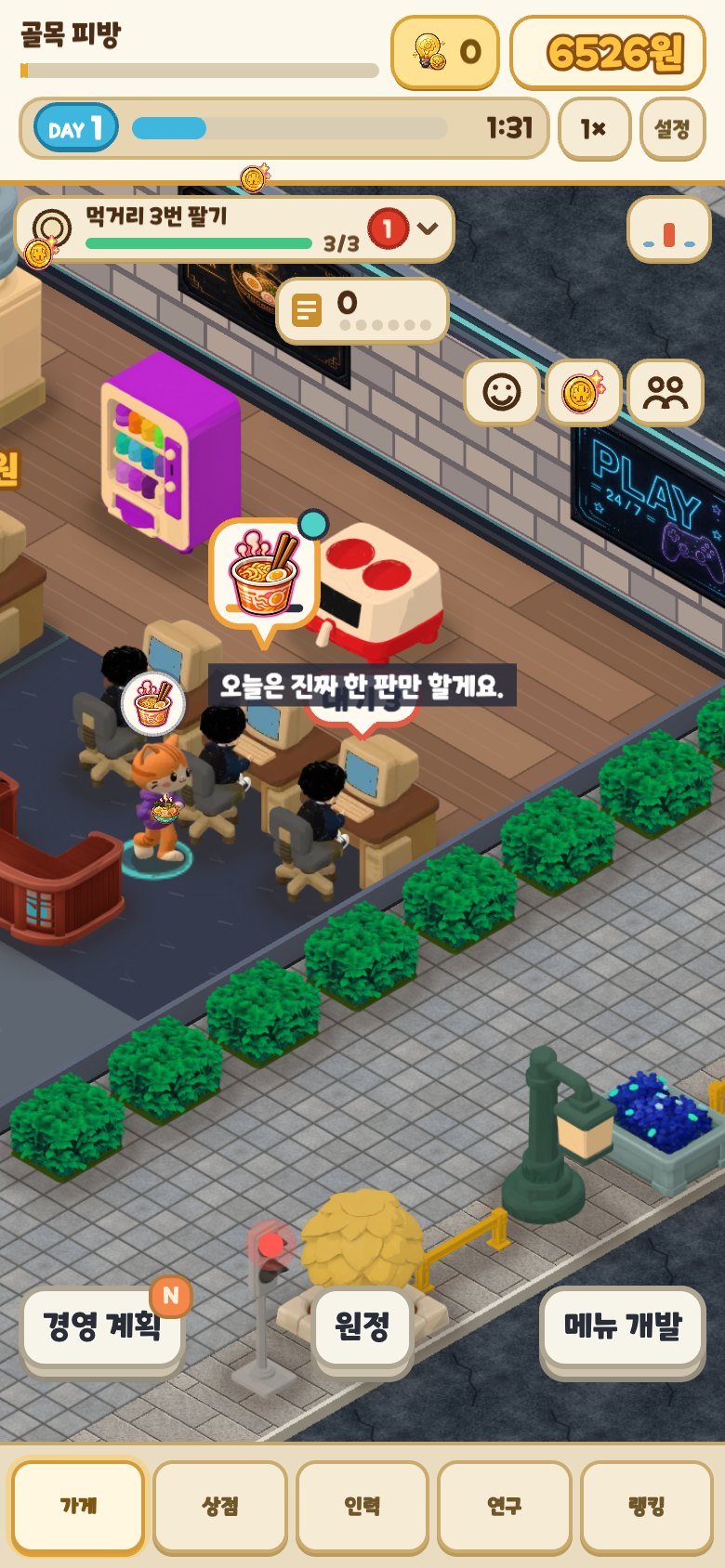
The day-one settlement sheet in the game shows seat fees +6,093 won and food +17,098 won. These are in-game numbers, so to be clear, they are not the share at real PC bangs. Still, building the game so that growing the food column wins follows the trend we saw in real life.
Even a slot to develop your own menu
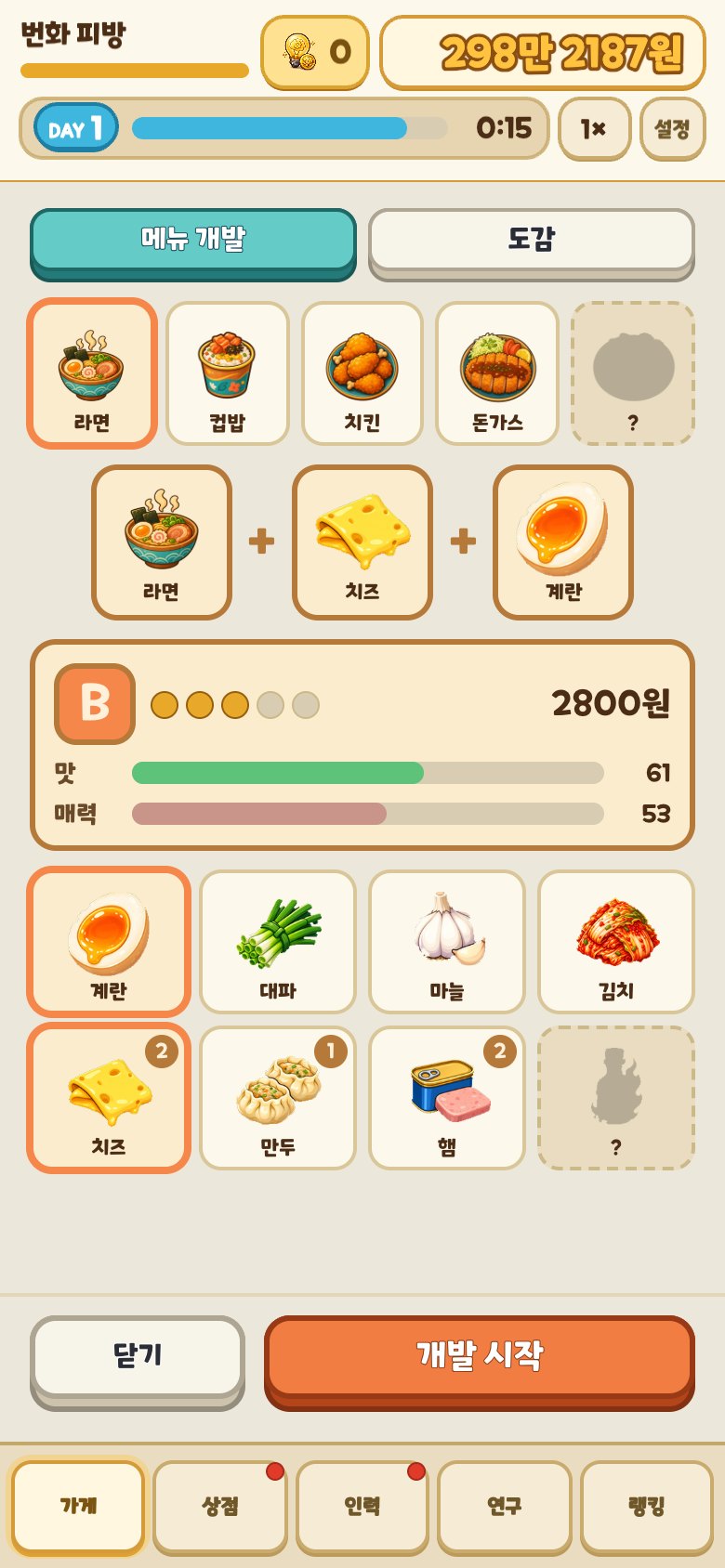
The game also has a menu development slot where you add cheese and egg to ramen to raise its taste and appeal.
FAQ
Do Korean PC bangs serve food?
Yes, most do. Common prices are about 1,500 to 2,000 won for cup ramen, 5,000 to 7,000 won for a rice bowl and 6,000 to 9,000 won for chicken (Korea Plug 2026-05), and many shops take orders at your seat.
What percentage of PC bang sales comes from food?
There are no official statistics. The KB Financial Group Research Institute writes that it rose from about 10% in the past to about 40% in 2020, and an industry estimate (Bridge Economy 2019) says shops with a full kitchen get 40 to 60%.
Why did PC bangs turn into restaurants?
The full smoking ban in June 2013 cut customers, and shops responded by going cafe-style and growing food sales, which is cited as the main trigger. Order apps and mukbang content then carried the trend on.
Can a PC bang cook and sell ramen?
Industry media explain that a game-providing license alone does not allow cooking and selling food, and the shop must also operate as a restaurant under a license such as the combined distribution game-providing business. Check the details with the local district office.
More from the blog
 ComparisonOnsen and bathhouse games: 8 compared by what the store pages sayOnsen and bathhouse games from Steam, Google Play and the App Store in one table: price, rating, idle or not, Korean and Japanese support, plus the weak spots of our own game.
 ComparisonIdle tycoon games that work offline: 8 picks sorted by store labelsWhich idle tycoon games work offline? Google Play tag, store wording, list price and ads in one table, plus our own game's weak spots.
 Games likeFinished Kairosoft? 14 games to play next, sorted by what you lovedIf you have played through Kairosoft, here are 14 games sorted into four flavors: short grow-it sessions, running a shop, watching residents live, and layout puzzles. Steam list prices, review scores and UI languages checked by hand.
 Behind the scenesI tried to crash my own app to test crash reporting, and it wouldn't crashA solo dev added a switch to crash an iOS app on purpose and test crash reporting, and the app wouldn't crash. Then Play pre-launch report errors got counted as user errors. Two wrong calls from week one.