
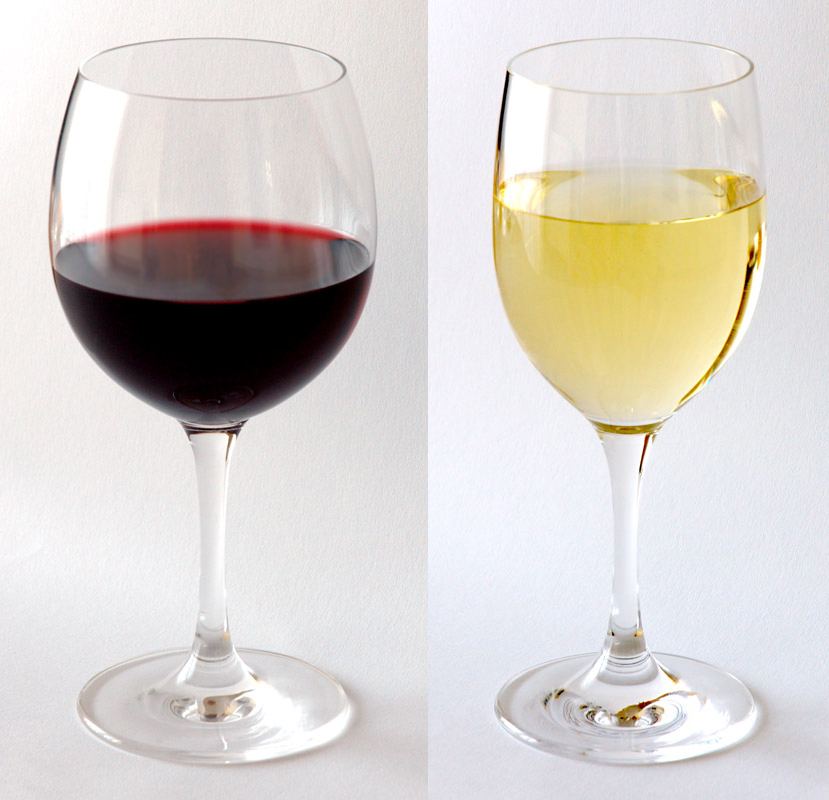
Short answer White wine dyed red with an odorless dye was described in red wine aroma words by 54 oenology undergraduates.
The participants were 54 undergraduate students in the enology program at the University of Bordeaux.
In the first week, they tasted red and white wine and chose words from a list of aroma terms. A week later, they were given two glasses again, holding the same list. One glass was white wine. The other was that same white wine with red dye added.
 Just adding dye changes how they rate the smell?
Yet the students who got the red-looking white mostly reused the words they had used for red wine.
The red words were things like blackcurrant, raspberry, cherry and prune.
So the nose smelled it, but the eyes butted in.
Their interpretation is that the tasters ignored smell because of what they saw.
This paper alone can't tell us that professional tasters would do the same.
Watch it as a short
Sources
Photo credits
- Red and white wine in glass.jpg, André Karwath, CC BY-SA 2.5 (source)
- Pouring red wine into a glass.jpg, Dave Gough, CC BY 2.0 (source)


More useless facts
 PsychologyRepeat a Word and Its Meaning DisappearsSay one word over and over and something strange happens
 PsychologyYour Dog Can Catch Your YawnsWhen you yawn, your dog might yawn right along with you
 FoodPineapples Weren't Bought to Be EatenIn 18th-century England, a pineapple was something you showed off at parties
 HistoryThe table decoration has a cannon?This ship-shaped table ornament packed a clock, moving figures and an automatic cannon